A short serve to the wide forehand draws your opponent in and to the side, opening their backhand for your attack. When to use it and how to follow up, step by step.

Diagrams show the table from above, you on the left. Solid gold lines are your shots, dashed lines your opponent’s. Tap any step to enlarge it.Short serve to the wide forehand, step by step
The animation plays the whole sequence; the frames below break it into single shots.
Why this pattern wins points
Most players protect their backhand when receiving and stand slightly towards that side. A short serve wide to the forehand makes them step in and across, and the return comes from a stretched position, often long. The backhand corner is then furthest from them, so an attack there is hard to recover for.
Key points
- Keep it short and wide: the second bounce should be close to the side line.
- Use backspin or no-spin, so a flick is difficult from that angle.
- Expect a long push or a flick towards your forehand, and be ready to attack.
- Attack to their backhand, the side they have just moved away from.
Common mistake
Letting the serve drift long or high. From the wide forehand, a long serve gives them an angled forehand attack.Common questions
Why serve short to the forehand?
Because most players stand towards their backhand to receive. A short, wide forehand serve pulls them in and across, opening the backhand for your next attack.
What spin should a short forehand serve have?
Backspin or no-spin, kept low. Both are hard to flick from a wide position, and the no-spin version tends to come back slightly higher.
Related strategies
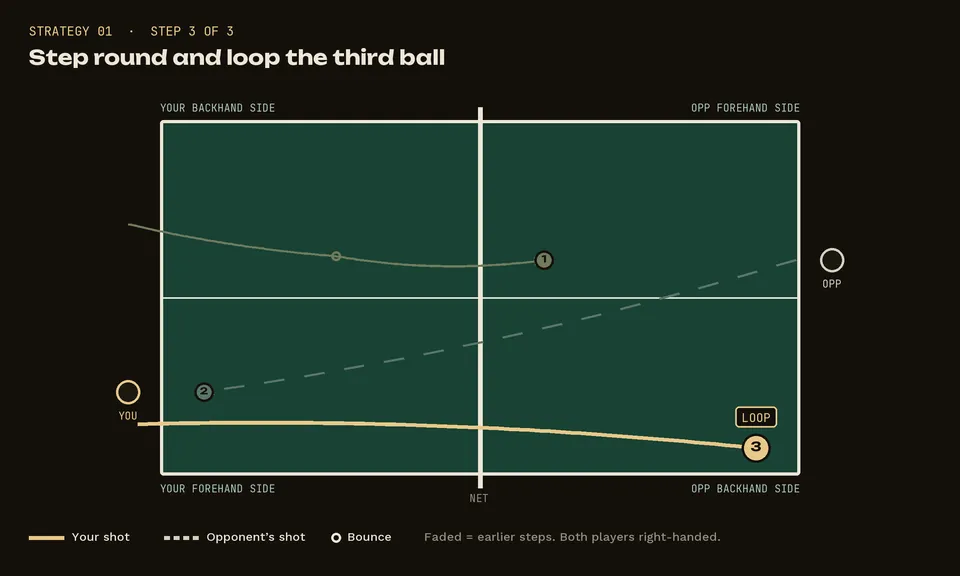
Serve short, attack the third ball
You have a low short backspin serve and a forehand loop, and your opponent rarely flicks.
Open strategy →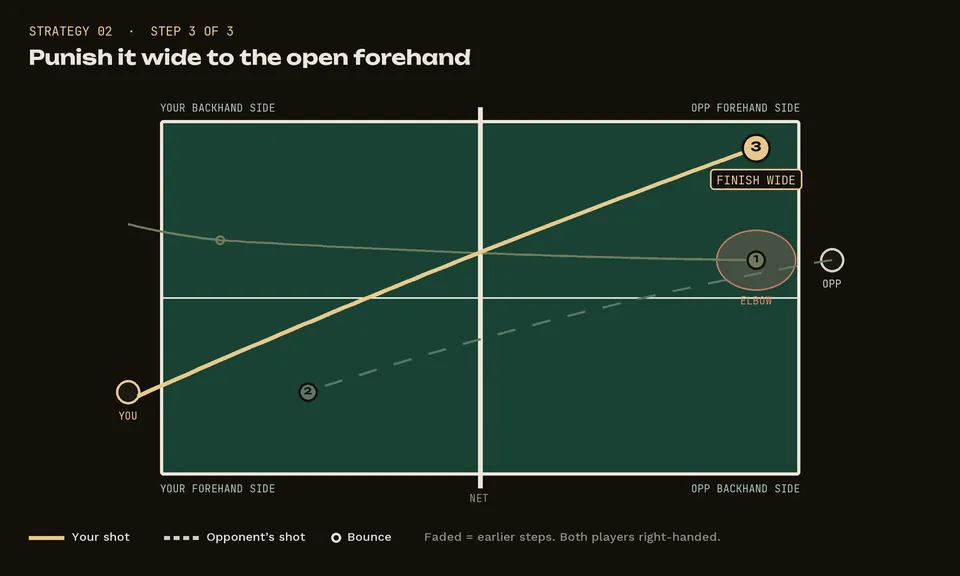
Fast long serve to the elbow
Your opponent starts leaning over the table waiting for short serves, or you need a change of rhythm at a big point.
Open strategy →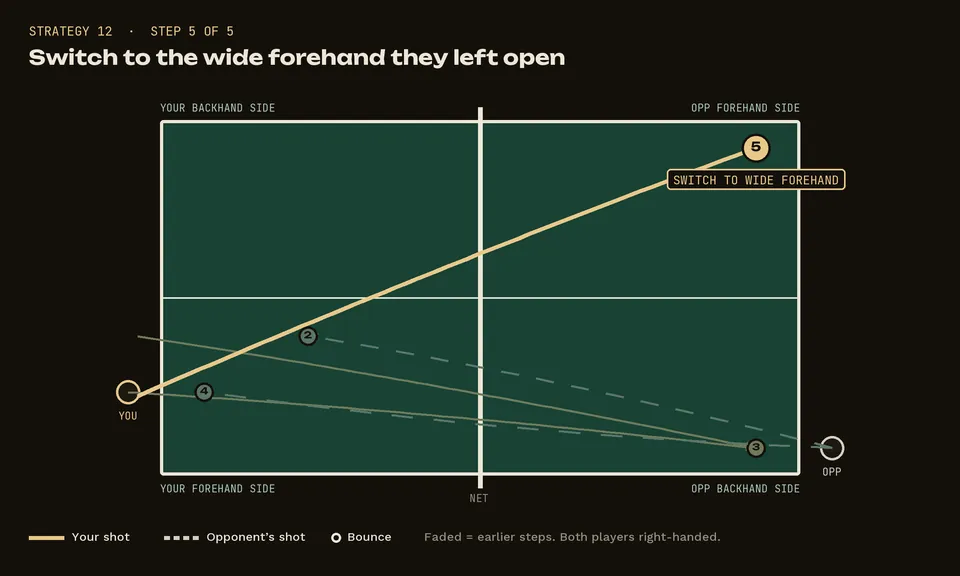
Attack a weak backhand
One of your opponent's wings, often the backhand, is clearly weaker or only returns the ball safely.
Open strategy →Match your setup to your game
Tell the AI setup finder how you play, or compare every Loki rubber on speed, spin and control, and build a bat that suits the patterns you use most.