
The short serve and third-ball attack is the first pattern most coaches teach: serve short and low so your opponent cannot attack, then loop the push that comes back. Here it is step by step.
Diagrams show the table from above, you on the left. Solid gold lines are your shots, dashed lines your opponent’s. Tap any step to enlarge it.Serve short, attack the third ball, step by step
The animation plays the whole sequence; the frames below break it into single shots.
Why this pattern wins points
A short, low serve takes away your opponent's chance to attack first. Most players answer it with a push, and a long push is a slow ball with predictable backspin, which is exactly what a loop is built to attack. Because you know what is likely to come back before you serve, you can be in position for it early, and the rally starts on your terms.
Key points
- Keep the serve low and short enough that it would bounce twice on their side. If it drifts long, they can attack it first.
- Serve from your backhand corner, so your forehand covers most of the table for the third ball.
- Use the same action for a no-spin serve now and then. A push against no-spin floats up and is easier to attack.
- The long push is the ball you want. Be ready for it before the serve has even landed.
Common mistake
Watching your serve instead of recovering. Get back into a ready position the moment the ball leaves the bat, and lift the loop more against a heavy push rather than driving it flat into the net.Common questions
What is the third ball in table tennis?
The serve is the first ball, the return is the second, and the server's next shot is the third. A third-ball attack means the server attacks that shot, usually with a loop against a push, after a serve designed to produce a predictable return.
What if my opponent flicks my short serve?
Keep the serve lower and shorter, and mix in more backspin, which is harder to flick. If they still flick well, vary with a fast long serve to the elbow so they cannot wait over the table for the short one.
Related strategies

Short serve to the wide forehand
Your opponent receives comfortably on the backhand, or stands in their backhand corner waiting.
Open strategy →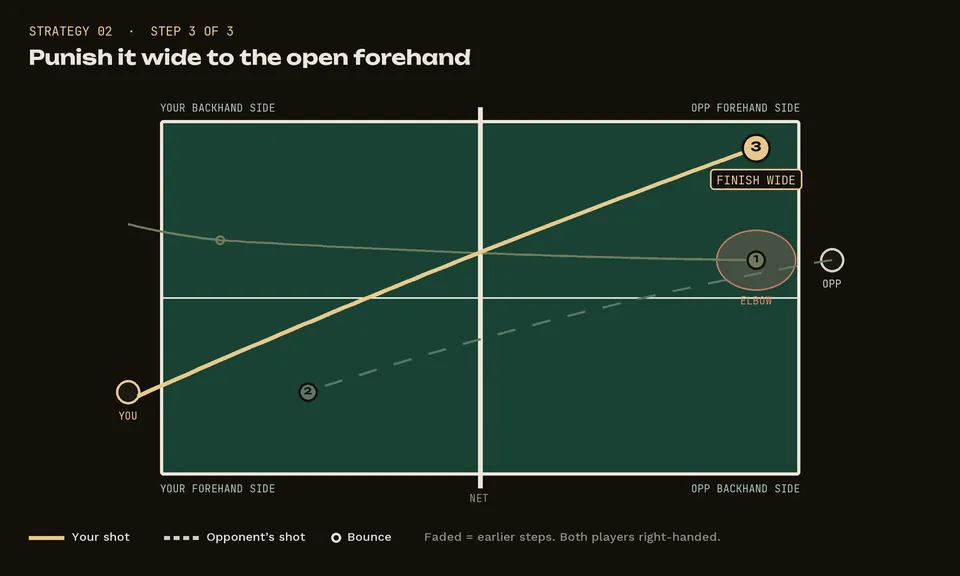
Fast long serve to the elbow
Your opponent starts leaning over the table waiting for short serves, or you need a change of rhythm at a big point.
Open strategy →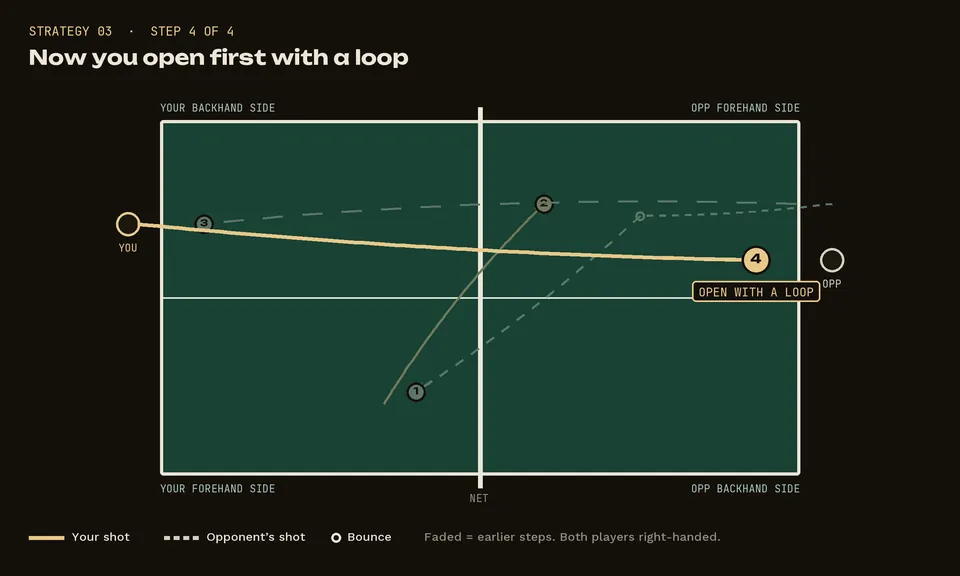
Receiving short serves
Your opponent serves short backspin or no-spin to set up their own third-ball attack.
Open strategy →Match your setup to your game
Tell the AI setup finder how you play, or compare every Loki rubber on speed, spin and control, and build a bat that suits the patterns you use most.