How to play against a left-hander in table tennis: why your forehand cross-court goes straight to their backhand, where to serve, and how to finish wide. Step-by-step diagrams.
Diagrams show the table from above, you on the left. Solid gold lines are your shots, dashed lines your opponent’s. Tap any step to enlarge it.Playing a left-hander, step by step
The animation plays the whole sequence; the frames below break it into single shots.

Why this pattern wins points
Against a left-hander the familiar angles swap. Your cross-court forehand now travels to their backhand, and their cross-court forehand comes at your backhand. Many right-handers lose to lefties simply because they play their usual patterns into the lefty's forehand. Starting on the lefty's backhand and switching wide to their forehand once they have committed turns the unfamiliar geometry into an advantage.
Key points
- Your forehand cross-court reaches a left-hander's backhand. Use it to build the rally.
- Serve to their backhand side, short or fast long, to keep their forehand out of the first attack.
- Watch their forehand cross-court: it comes into your backhand, so be ready on that side.
- Once they lean to their backhand, the wide forehand is the open space.
Common mistake
Playing your usual forehand-to-forehand rally. Against a left-hander that line is a straight one into their forehand, often their strongest shot.Common questions
Why is it hard to play left-handers in table tennis?
Mostly unfamiliarity. The cross-court angles are reversed, their sidespin serves curve the other way, and most players practise far more against right-handers.
Where should I serve against a left-hander?
Usually to their backhand side, either short or fast and long, so their forehand is kept out of the first attack. Mix in a wide serve to the forehand now and then so they cannot wait on one side.
Related strategies
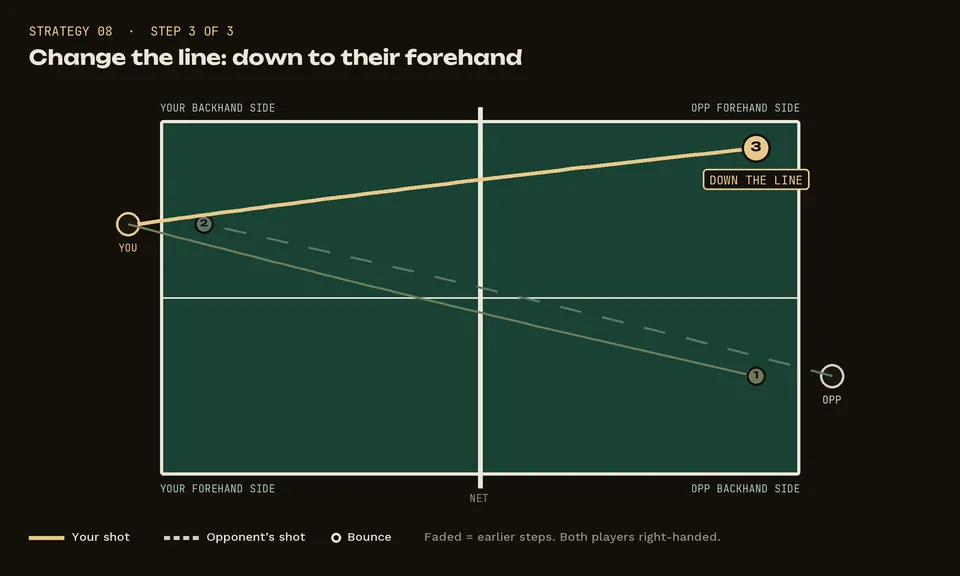
Switch the line
You are in a cross-court rally, backhand to backhand or forehand to forehand, and your opponent has settled into it.
Open strategy →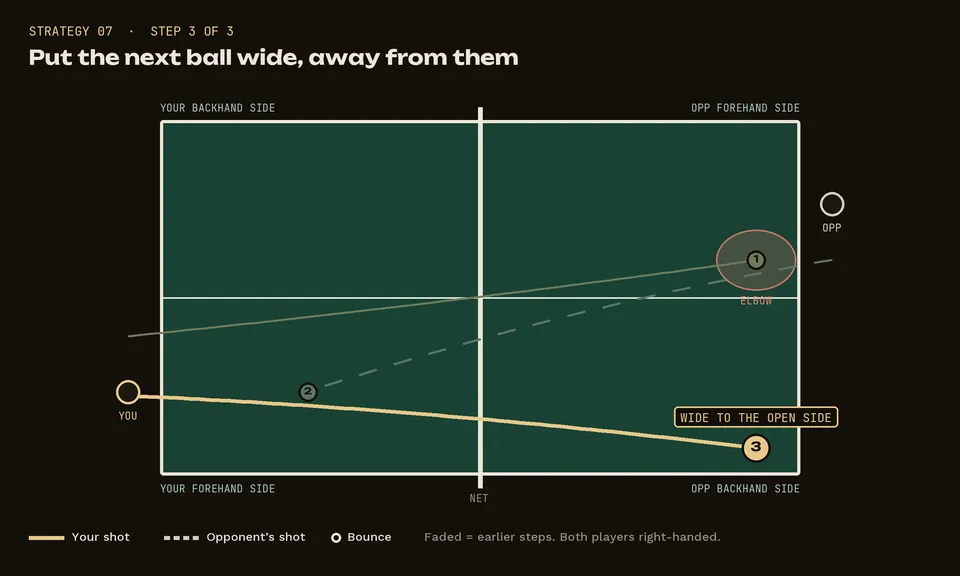
Attack the crossover point
Against almost anyone, and especially a player strong on both wings.
Open strategy →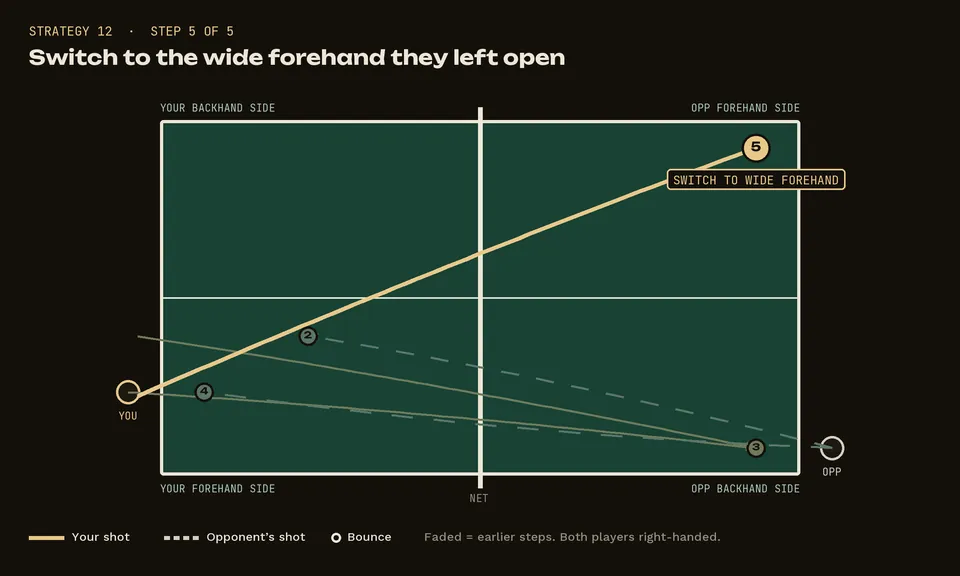
Attack a weak backhand
One of your opponent's wings, often the backhand, is clearly weaker or only returns the ball safely.
Open strategy →Match your setup to your game
Tell the AI setup finder how you play, or compare every Loki rubber on speed, spin and control, and build a bat that suits the patterns you use most.