Aramid Carbon (ADC) sits directly against the core on five Loki blades, trading outright speed for the deep, forgiving dwell that heavy topspin players lean on.
What Aramid Carbon actually does to a blade
Aramid fibres have high tensile strength but comparatively low stiffness, so when a pair of ADC plies sits between the outer wood face and the core, they flex and absorb energy rather than snapping it straight back. That is the opposite job to a stiff outer-carbon layer: instead of adding pace, inner aramid carbon extends the time the ball spends in contact with the rubber and blade face (dwell time), which is what lets a player brush and accelerate the ball into heavy rotation rather than simply driving through it.
Because the fibre sits inside the sandwich rather than under the face veneer, the touch feel at the surface stays close to a wood blade for short game and serve receive — the composite only engages once a stroke compresses the blade far enough to reach it, which is why ADC blades are usually built around an OFF or OFF+ rating rather than the more extreme OFF++ builds outer-carbon blades can reach.
Loki blades built with Aramid Carbon
Five published SKUs use an inner ADC layup, from an entry-level OFF+ blade through to two player-signature editions. All three below carry Speed and Control on Loki’s 1–15 manufacturer scale.
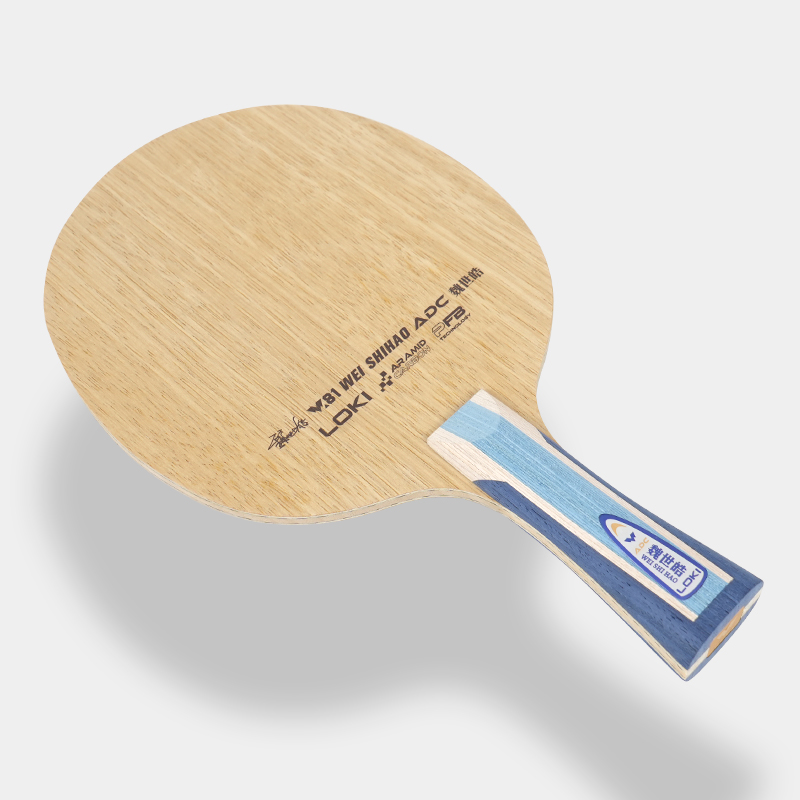
Loki W81 Wei Shihao ADC
- TypeOFF+
- Layers5W + 2 ADC
- Weight89g
- Speed / Control13.2 / 12.5
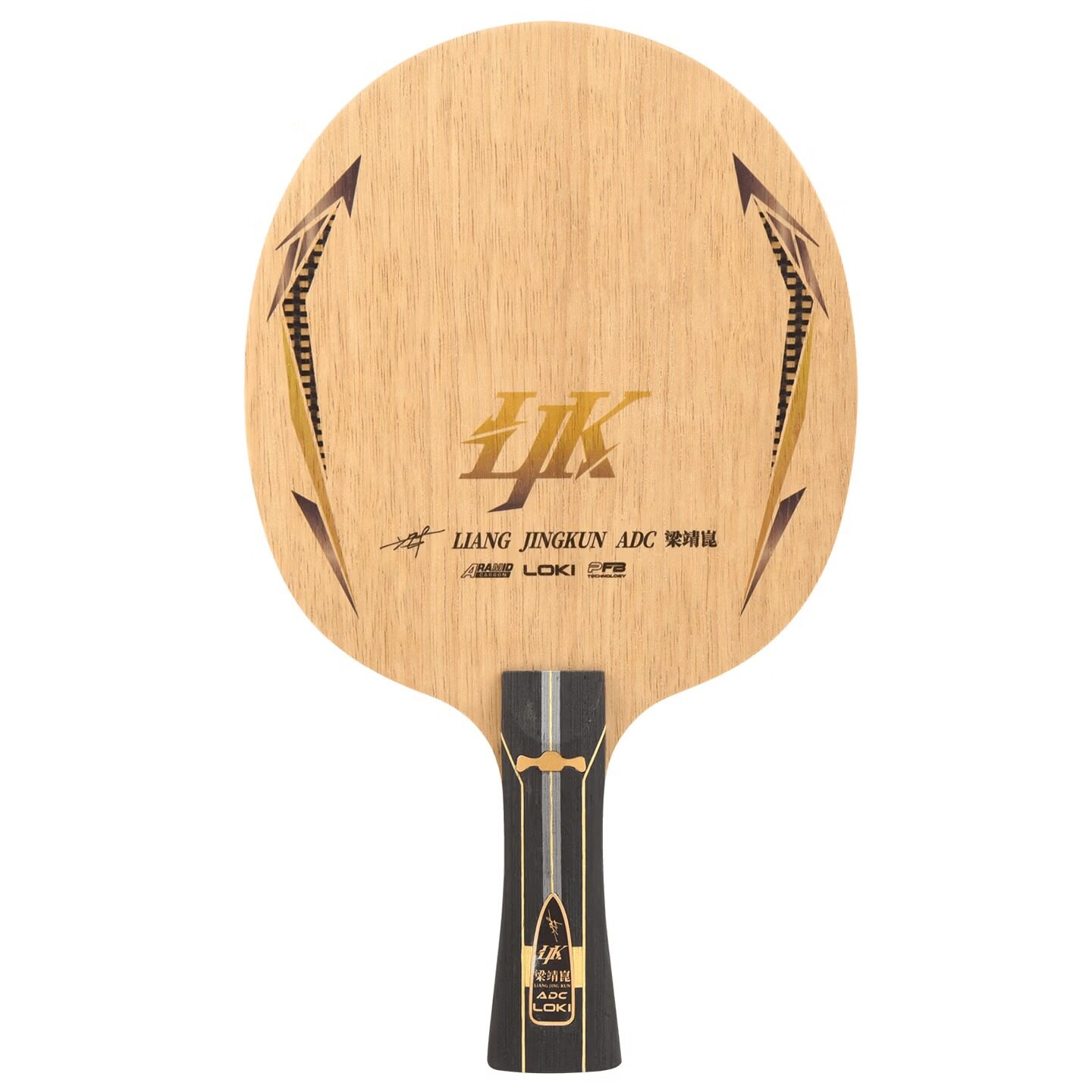
Loki Liang Jingkun ADC
- TypeOFF+
- Layers5W + 2 ADC
- Weight88g
- Speed / Control13.0 / 12.0
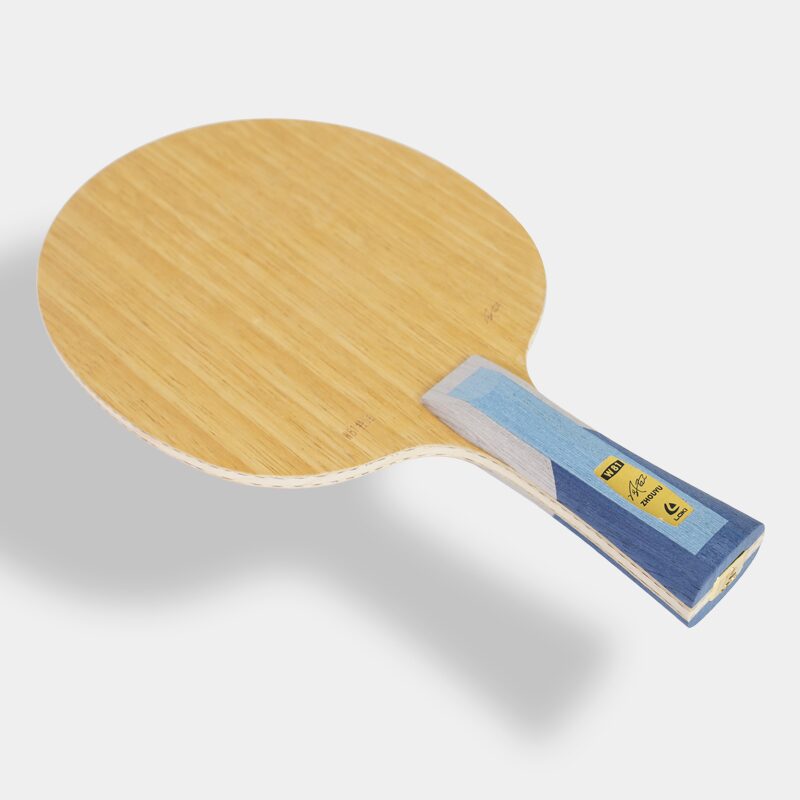
Loki Zhouyu ADC Special Version
- TypeOFF+
- Layers5W + 2 ADC
- Weight90g
- Speed / Control13.7 / 12.6
Two further ADC builds exist in the range at the same 5W+2 layup — the Liang Jingkun ADC Special Version and the W81 Player ADC Special (Athlete Version) — both sitting in the same Speed 13–14 / Control 12–13 band as the three above.
Common questions
Is an Aramid Carbon blade legal for Table Tennis England and ITTF events?
Yes. Loki builds every ADC blade at 5 wood plies plus 2 thin composite plies, so the natural wood still makes up the great majority of total blade thickness — the construction test the ITTF applies to blades, rather than an approval list (that list only exists for rubber coverings). See the UK blade guide for the full 85% rule.
Who suits inner Aramid Carbon over an outer-carbon blade?
Players who already generate their own spin with a full swing and want the blade to extend dwell rather than add raw pace — typically intermediate to advanced loopers moving off an all-wood blade who still want a forgiving, wood-like touch on short balls.
What is the difference between Aramid Carbon and Aramid Carbon-Light?
Same aromatic-polyamide fibre family, different areal weight. Aramid Carbon-Light uses a lower-density weave specifically to keep total blade weight down, at a small cost to stiffness — see the Aramid Carbon-Light guide for the blades built on it.
Related composite fibre guides
Build a bat around inner Aramid Carbon
Pick one of the ADC blades above and match it with two rubbers in the Racket Configurator, or browse every inner-carbon blade in the range.