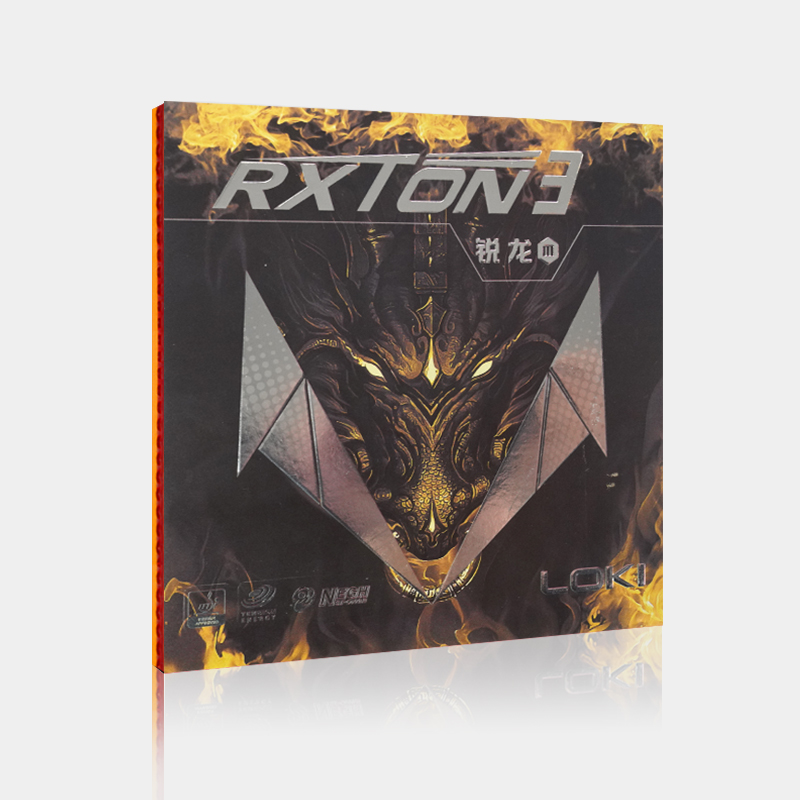
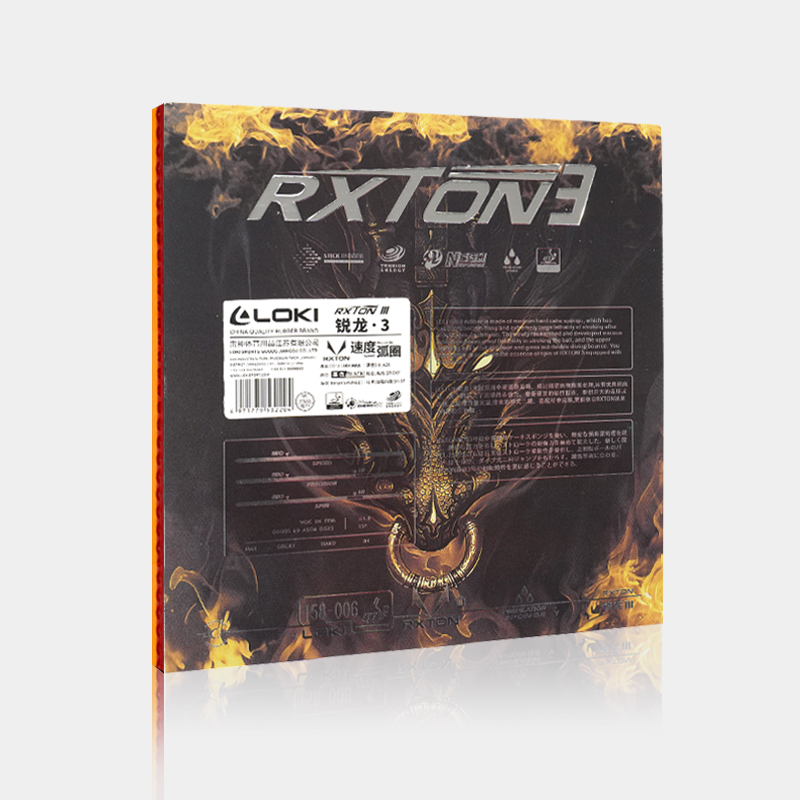
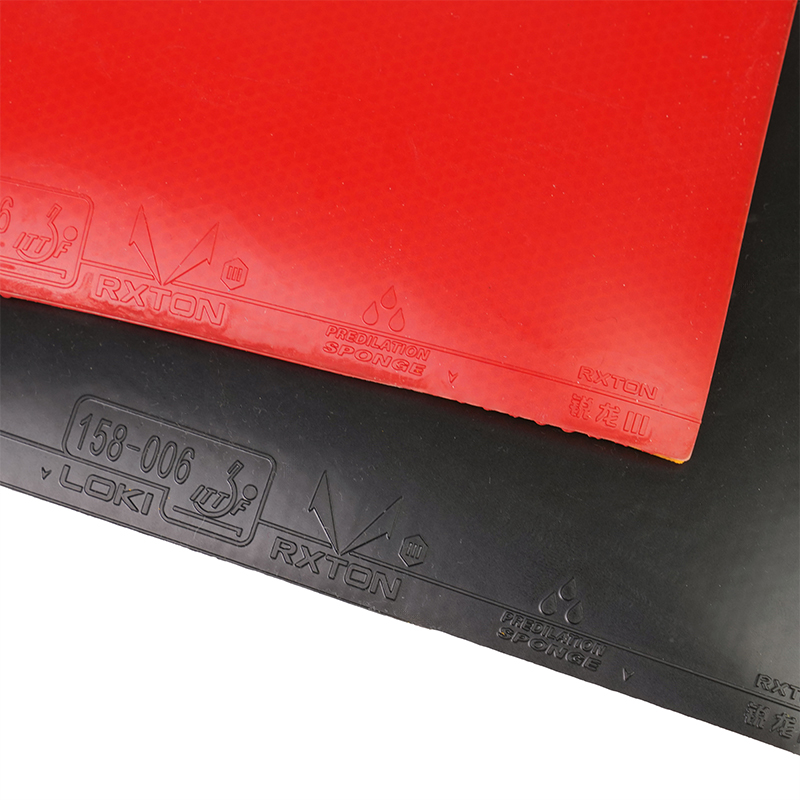
Loki Rxton 3 Max
£15.99
Out of StockNegh Sponge II sticky rubber; strong grip and rotation, versatile bottom strength
Want to know when this is back?
Performance Profile & Play Style Suitability
Manufacturer Engineering SpecsWho is the Loki Rxton 3 Max for?
Negh Sponge II sticky rubber; strong grip and rotation, versatile bottom strength.
This rubber comes from the Loki Rxton range, A39 sponge hardness, available in 2.1mm sponge thickness. Offered in black, red.
Tacky rubbers grip the ball directly off the sponge, which favours spin generation and close-to-the-table play, typically with a shorter, more controllable throw angle.
Best suited to players with an all-round game that mixes attacking and defensive elements close to and away from the table.
As a guideline, match sponge hardness to your own contact power: harder sponges reward players who can generate their own speed, while softer sponges are easier to control and better suited to a slower, more compact stroke.
Recommended Blade Pairings
Specialist Setup AdviceTo get the most dynamic response and trajectory from this rubber, we recommend pairing with these tournament-proven Loki carbon blades:
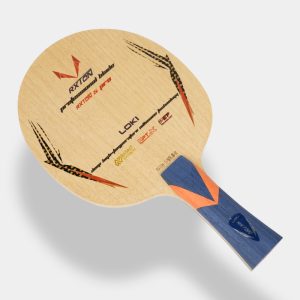
Outer Aryl Carbon composite construction delivering direct trajectory, crisp impact feedback, and explosive rebound speed for modern power attackers.
+ Add Blade to Bag (£32.99)
Layered all-wood construction engineered for organic ball feedback, supreme control, and natural touch without synthetic vibration.
+ Add Blade to Bag (£27.99)Benchmark Equipment Value Comparison
Direct Engineering ComparisonDHS Hurricane 3 Neo / Provincial
Loki Rxton 3 Max
Complete Technical Specifications
Official Data Sheet| Rubber Surface | Tacky |
| Sponge Thickness | 2.1mm |
| Hardness (Chinese Scale) | 39° |
| Hardness (European Scale) | ≈51° |
| Playing Style | All-Round |
| Player Level | Intermediate |
| Tournament Authorisation | ITTF Authorised Racket Covering (LARC listed) |
Sponge hardness is the manufacturer figure; values marked ≈ are converted using factory durometer calibration. How the two scales compare