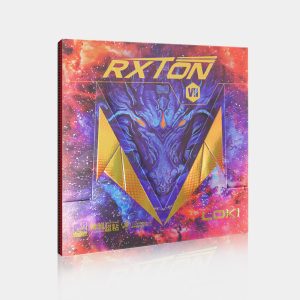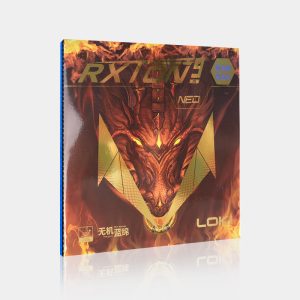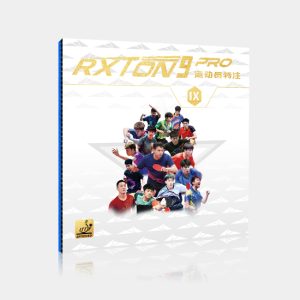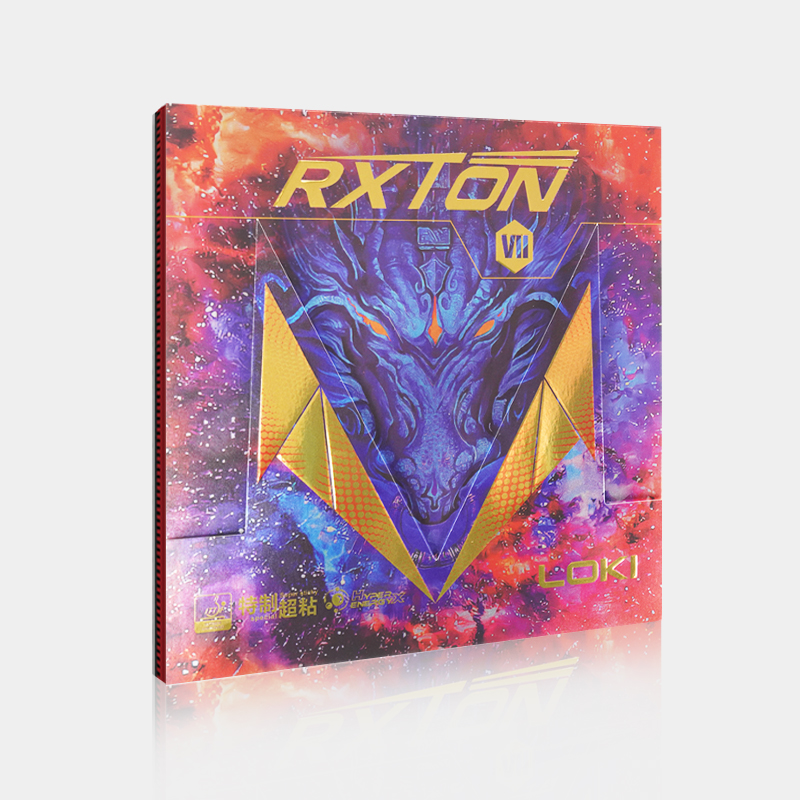
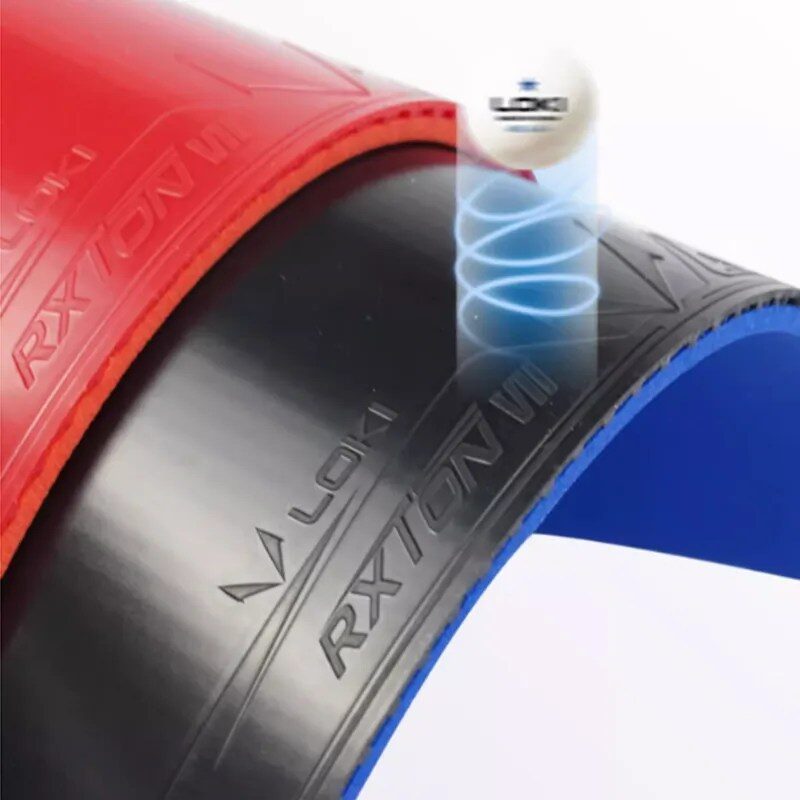
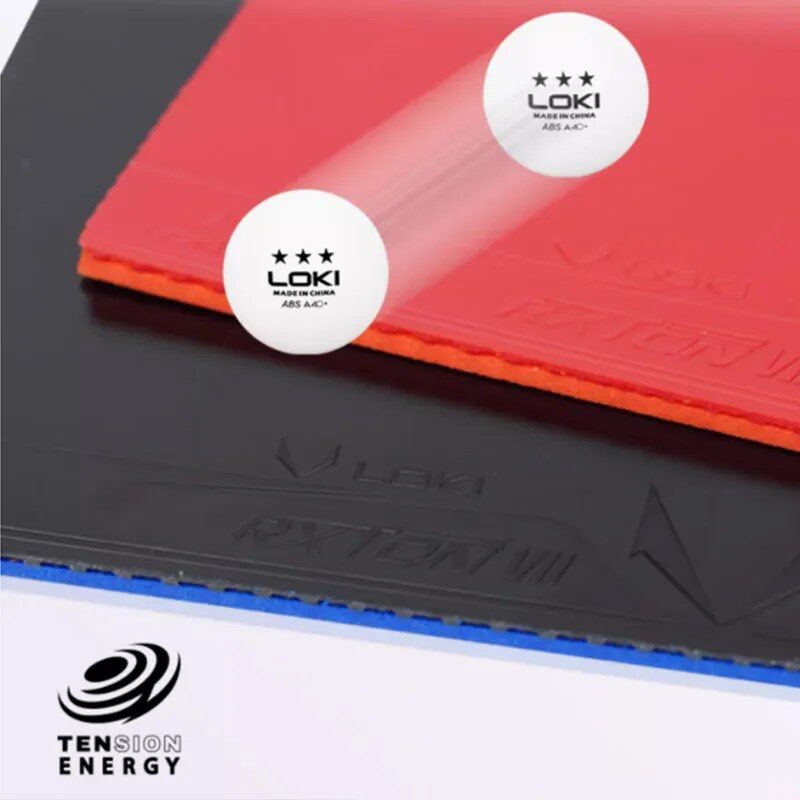
Loki Rxton 7
£20.99
Out of StockKunlun Sponge II sticky rubber; elastic medium-hard sponge, rich arc variation, strong spin
Want to know when this is back?
Performance Profile & Play Style Suitability
Manufacturer Engineering SpecsWho is the Loki Rxton 7 for?
Kunlun Sponge II sticky rubber; elastic medium-hard sponge, rich arc variation, strong spin.
This rubber comes from the Loki Rxton range, A37 (FH) / A39-40 (BH) sponge hardness, available in 2.1mm sponge thickness. Offered in black, red.
Tacky rubbers grip the ball directly off the sponge, which favours spin generation and close-to-the-table play, typically with a shorter, more controllable throw angle.
Best suited to players with an attacking, offensive game built around generating your own power.
As a guideline, match sponge hardness to your own contact power: harder sponges reward players who can generate their own speed, while softer sponges are easier to control and better suited to a slower, more compact stroke.
Recommended Blade Pairings
Specialist Setup AdviceTo get the most dynamic response and trajectory from this rubber, we recommend pairing with these tournament-proven Loki carbon blades:
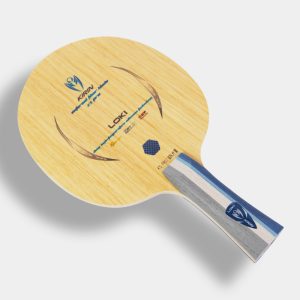
Outer Aryl Carbon composite construction delivering direct trajectory, crisp impact feedback, and explosive rebound speed for modern power attackers.
+ Add Blade to Bag (£34.99)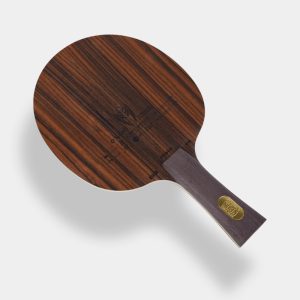
Inner Aramid Carbon layup positioned directly around the core. Offers prolonged dwell time, softer touch near the net, and loaded spin on counter-loops.
+ Add Blade to Bag (£33.99)Benchmark Equipment Value Comparison
Direct Engineering ComparisonDHS Hurricane 3 Neo / Provincial
Loki Rxton 7
Complete Technical Specifications
Official Data Sheet| Rubber Surface | Tacky |
| Sponge Thickness | 2.1mm |
| Hardness (Chinese Scale) | 37° (red) / 39° (black) |
| Hardness (European Scale) | ≈47° (red) / ≈51° (black) |
| Playing Style | Offensive |
| Player Level | Intermediate |
| Tournament Authorisation | ITTF Authorised Racket Covering (LARC listed) |
Sponge hardness is the manufacturer figure; values marked ≈ are converted using factory durometer calibration. How the two scales compare